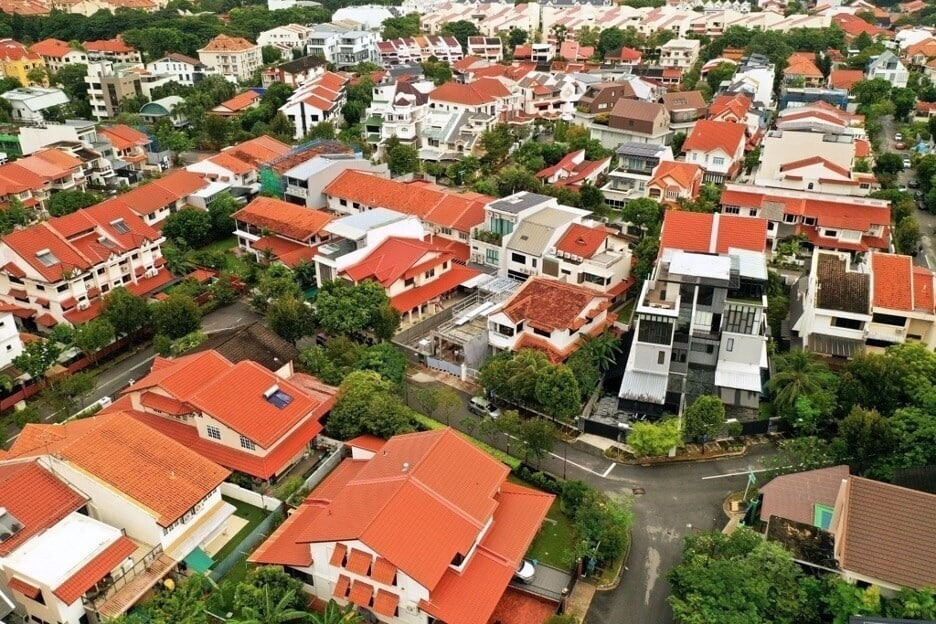
Buying landed property in Singapore is a bigger decision than most people expect. It's not just a larger version of a condo purchase. The eligibility rules are different. The cash you need is different. And the risks on a resale home are different too.
I've spent 20 years advising clients on property in Singapore, landed included. This isn't a generic checklist. It's what I'd actually tell you before you make an offer. As a landed property agent in Singapore, I handle each landed enquiry personally and discreetly, whether you're buying or selling. Most of my work as an expert real estate consultant in Singapore covers HDB and condos, but the same honest, numbers-first approach carries straight into landed decisions where the stakes and the questions are bigger.
Who Can Actually Buy Landed Property in Singapore
Let's start here, because this trips up more people than price does. Singapore Citizens can buy landed property freely. No approval needed, no waiting. Permanent Residents are different. A PR generally needs SLA approval to acquire restricted landed residential property. This isn't automatic, and it isn't guaranteed. The Singapore Land Authority assesses each application case by case.
Foreigners face the same approval requirement, and it's rarely granted unless there's a strong case for it, usually tied to economic contribution to Singapore. So before you fall for a terrace house online, check where you actually stand. I'll walk you through your eligibility before we look at a single listing.
What Landed Property Actually Costs Right Now
Prices vary a lot by type, size, tenure, and location. So treat the numbers below as a broad range, not a fixed price tag.
Based on URA's most recent full-year transaction data, terrace houses have transacted at a median of around $4.2 million. Semi-detached homes sit closer to $9.9 million. Detached houses come in around $10.5 million. Good Class Bungalows sit well above all of these, often into eight figures, and they're one of the most tightly restricted segments in the whole market.
District matters more here than in condos. A terrace in the Outside Central Region can cost a fraction of one in Bukit Timah or Holland Road. Location isn't a detail on a landed purchase; it's most of the price.
The Cash You Actually Need, Not Just the Downpayment
This is where most guides stop too early.
For a buyer with no outstanding housing loan who qualifies for the maximum 75% Loan-to-Value limit, the minimum down payment is 25%, with at least 5% in cash. If you already have one housing loan, that LTV limit can drop to 45%. With two or more, it drops further.
Your income matters just as much as your down payment. Under MAS rules, your Total Debt Servicing Ratio can't exceed 55% of your gross monthly income; this covers every loan you're carrying, not just the new one. Banks also stress-test your loan at a set interest rate floor, not the rate you'd actually pay. So the loan you qualify for on paper might be smaller than you expect.
Then there's Additional Buyer's Stamp Duty. As a Singapore Citizen, you pay 0% ABSD on your first residential property, 20% on your second, and 30% on your third and beyond. A Permanent Resident pays 5% on the first, 30% on the second, and 35% after that. A foreigner pays 60% on any purchase, regardless of how many properties they already own, unless a Free Trade Agreement remission applies.
Here's a rough worked example. Say you're a Singapore Citizen buying a $4 million terrace house as your first property, with no existing loan. At 75% LTV, you'd borrow $3 million, leaving a $1 million down payment, at least $200,000 of that in cash. Add Buyer's Stamp Duty of roughly $180,000. No ABSD on a first property. Legal and valuation fees sit in the thousands on top. That's well over $1 million in cash and CPF before you've touched a renovation budget.
Buy that same property as your second home, and 20% ABSD alone adds $800,000 to the bill. The maths changes completely depending on your profile; check yours before you start looking seriously.
The Risk Nobody Mentions: Unauthorised Renovations
Here's something most buyers never check, and it can cost them badly.
Many resale landed homes have been renovated over the years. Not all of that work was approved. URA requires buyers to check that a property has no unauthorised works before they take over, because once you own it, the liability can become yours, not the seller's.
Common examples: rear extensions built beyond the required setback, enclosed balconies or roof terraces that breach fire safety rules, basements that weren't properly approved. If URA flags any of this after you've bought, you could be the one reinstating it, not the previous owner.
I always tell clients to check the seller's approved building plans before making an offer, not after. It's one of the few checks that can save you real money, and it's one almost nobody does on their own.
Freehold vs Leasehold Landed: What Actually Matters
Freehold sounds better. It isn't automatically better.
A freehold property in a poor location or on an awkward plot can underperform a well-located 99-year leasehold one. What actually matters is the land, its size, its shape, its surroundings, and what's realistically possible to build on it.
Don't assume freehold means superior. Ask what the property is actually worth to you, not just what the title says.
Landed Property Trade-Offs You Should Weigh
Landed has real advantages. Limited supply, genuine land ownership, and a buyer pool that's smaller but often serious.
It also has real trade-offs. Liquidity is lower than condos; fewer buyers means a longer sale process if you need to exit. Holding costs run higher too: property tax, maintenance, and renovation budgets that can run into hundreds of thousands if the property needs real work.
So ask yourself honestly: are you buying this to live in long-term, or are you hoping it performs like an investment? The answer changes what you should be looking for.
Mistakes First-Time Landed Buyers Make
A few patterns come up again and again.
- Comparing purchase prices instead of all-in costs, including ABSD, stamp duty and renovation
- Assuming freehold automatically beats leasehold, without checking the actual land and location
- Buying with a short-term mindset, when landed transaction costs and buyer pools reward patience instead
- Skipping the check on approved building plans before making an offer
- Underestimating how much income they'll actually need once TDSR and the stress-test rate are applied
Most of these aren't expensive to avoid. They're expensive to ignore.
What I'd Tell a Client Before They Make an Offer
Before anything else, I'd ask what you actually want from this property. Living in it for decades is a different conversation than holding it as an asset.
Then I'd check your eligibility and your real financing position, not just what you think you can afford, but what the bank will actually lend you once TDSR and ABSD are factored in.
And I'd pull the approved plans before you fall in love with a specific house. It's a small step that protects you from a very expensive surprise later.
Thinking About Buying Landed Property in Singapore?
Landed decisions deserve a real conversation, not a generic guide. Send me a WhatsApp with what you're considering, and I'll give you a clear, honest read on where you stand, eligibility, real costs, and what to watch for before you make an offer.
I've spent 20 years advising clients across Singapore property, and landed is where the stakes are highest, and the details matter most. As a landed property agent in Singapore, I handle these conversations personally — no junior agent, no generic script, just a straight answer before you commit to anything.
FAQs
1. Can foreigners buy landed property in Singapore?
+
Generally, no, not without approval. Foreigners need SLA approval under the Residential Property Act to acquire landed residential property, and this is rarely granted outside strong cases tied to economic contribution.
2. Can Singapore PRs buy landed property without approval?
+
No. PRs generally need SLA approval to acquire restricted landed residential property, assessed case by case. It isn't automatic just because you hold PR status.
3. How much cash do I need to buy landed property in Singapore?
+
For a buyer with no existing loan at 75% LTV, expect at least 25% of the price as a down payment, with a minimum of 5% in cash. Add Buyer's Stamp Duty, ABSD if applicable, and legal fees on top, often well over $1 million in total for a mid-range terrace.
4. How much ABSD applies when buying landed property?
+
It depends on your profile and how many properties you already own. Singapore Citizens pay 0% on a first property, 20% on a second, 30% on a third or more. PRs pay 5%, 30%, and 35%. Foreigners pay a flat 60%, regardless of which property it is.
5. Is freehold landed property always better than leasehold?
+
No. Location, land size and future potential usually matter more than tenure alone. A well-located leasehold property can outperform a poorly located freehold one.
6. What should I check before buying a resale landed home?
+
Ask for the seller's approved building plans and confirm there's no unauthorised work on the property. Extensions, enclosed spaces or basements that weren't properly approved can become your liability after purchase.
7. Can unauthorised renovations become the buyer's problem?
+
Yes. Once you own the property, URA can hold you responsible for reinstating unauthorised works, even if a previous owner built them. Check before you buy, not after.
8. How is buying landed property different from buying a condo?
+
Landed involves eligibility rules that condos don't, heavier title and paperwork checks, a smaller buyer pool, and usually a longer, more private negotiation process. It rewards patience more than speed.