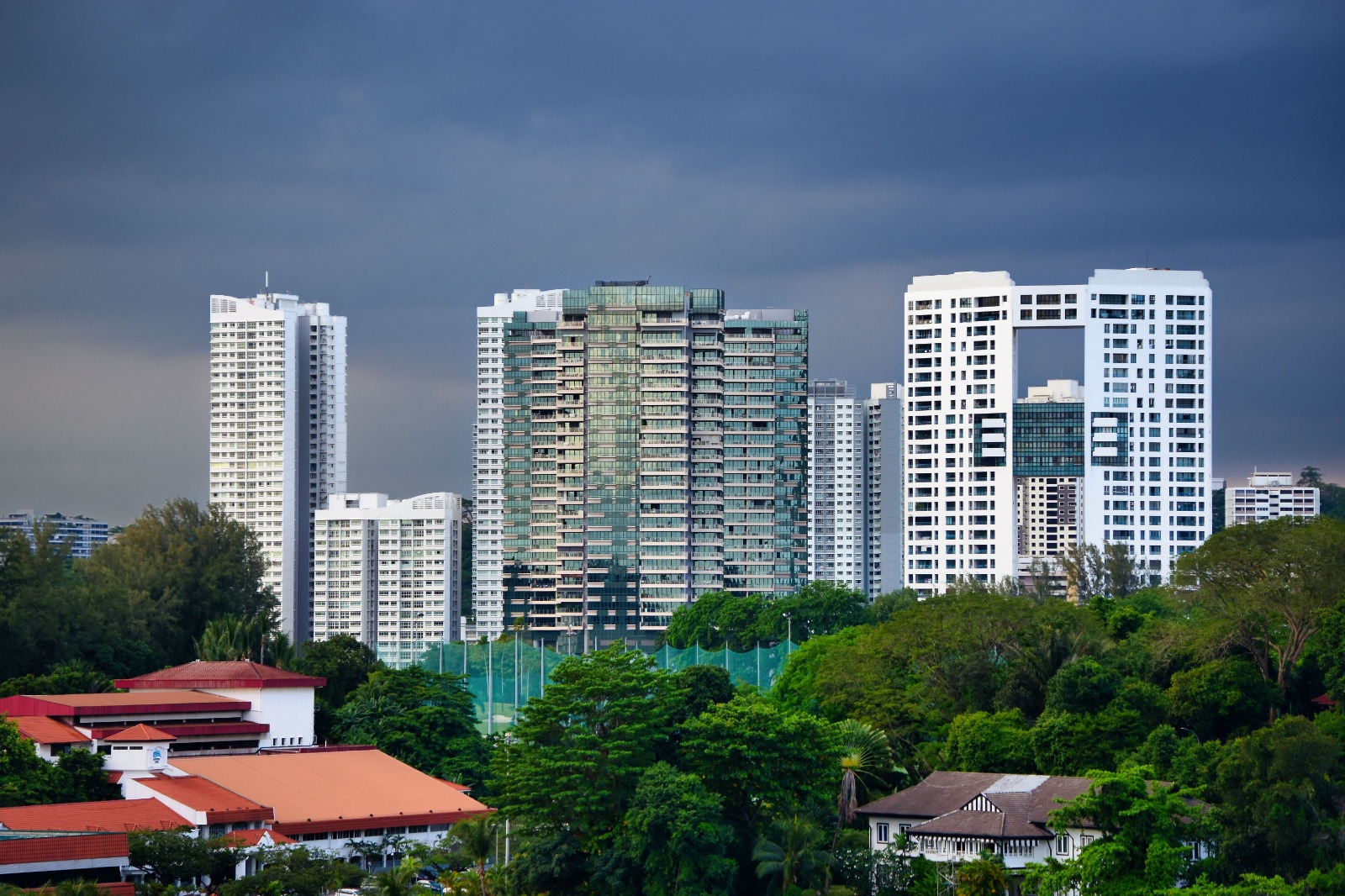
Want to buy commercial property in Singapore? It's a different game from buying a home. Loan rules differ. Tax works another way. And stamp duty has its own scale.
I'm Chandra, a commercial property agent in Singapore. After twenty years in Singapore property, I've seen buyers caught out by costs they never counted. So here are the numbers and the steps. Are you buying to use, or to invest? Keep that answer in mind. It shapes every choice below.
To buy commercial property, follow nine steps. Set your budget, line up a loan, shortlist units and check approved use. Then sign the option, do your checks, exercise it, pay stamp duty and complete. Expect Buyer's Stamp Duty of 1% to 5%. GST of 9% applies if the seller is registered. There's no ABSD and no CPF.
Who Can Buy Commercial Property?
Yes, almost anyone can. Citizens, PRs, foreigners and companies can all buy shops, offices and industrial units.
There's no ABSD on ordinary commercial property. ABSD is Additional Buyer's Stamp Duty, and it targets homes. CPF can't pay for it either. You'll use cash and a bank loan.
One catch is industrial land leased from JTC. JTC must approve the sale and your planned use. That can add weeks, sometimes months.
Shop, Office or Industrial: Which Should You Buy?
The right type depends on how you'll use it. Here's the quick view.
| Type | Best for | Watch for |
|---|---|---|
| Shop or shophouse | Retail, food and services | Foot traffic, approved use, any home upstairs |
| Office | Firms that need a business address | Upkeep fees, remaining lease, vacancy |
| Industrial B1 | Light use: storage, clean manufacturing, R&D | Power supply, floor loading, approved use |
| Industrial B2 | Heavier use: fabrication, logistics | JTC use class, vehicle access |
Location matters as much as type. Offices cluster in the CBD around Raffles Place and Tanjong Pagar. Shophouses with real foot traffic sit in places like Jalan Besar. Light industrial units are common in Ubi and Kaki Bukit. Heavier sites gather in the west, around Tuas and Joo Koon.
Many units are leasehold, often 30, 60 or 99 years. Some industrial sites in Woodlands and Punggol have 60-year leases. The lease length changes the price and the loan.
Is Now a Good Time to Buy?
Singapore's market isn't one story. URA's Q2 2026 data shows office vacancy near 11% and retail near 6.5%. CBRE reports industrial prices rose for eight straight quarters through Q1 2026. And EdgeProp noted that commercial deals led investment sales in the first half of 2026.
So industrial looks firm, while offices have more empty space. I'd rather match the unit to your plan than chase a headline.
What Does It Really Cost to Buy Commercial Property?
The price is only the start. Here's the full list.
| Cost | What to know |
|---|---|
| Buyer's Stamp Duty (BSD) | Paid by every buyer. Tiered from 1% to 5%. Due within 14 days of signing. |
| GST | 9% if the seller is GST-registered. On mixed-use, only the non-residential part. It applies to the option fee too. |
| ABSD | None on ordinary commercial units. A home upstairs may bring it. |
| Option fee and deposit | Commonly 1% at the option, and 5% in total at exercise. Your option sets the terms. |
| Legal and valuation fees | They vary by firm and deal. Ask for quotes early. |
| Property tax | 10% of annual value (the estimated yearly rent), every year. |
| Strata costs | Upkeep fees and a sinking fund (repair savings) for units in a larger building. |
| Agent fee | Negotiable. Agree it in writing. |
Here are the BSD tiers for commercial property since 15 February 2023:
- 1% on the first $180,000
- 2% on the next $180,000
- 3% on the next $640,000
- 4% on the next $500,000
- 5% on everything above $1.5 million
In dollars, that's $24,600 on a $1 million unit. A $2 million unit pays $69,600. And $3 million pays $119,600.
Cash You Need on Day One
Say you buy a $2 million unit with an 80% loan. You put down $400,000. BSD adds $69,600. That's $469,600.
If the seller charges GST, add $180,000. Many buyers pay GST in cash, so ask your bank early. The total then reaches $649,600, before legal and valuation fees.
I add all of this up on one page before you make an offer. That way, nothing surprises you later.
How Do You Pay for It? Loan Basics
Banks set most commercial loan terms. MAS sets no fixed limit on how much of the price a bank can lend. Banks often lend about 70% to 80%. Investment units may get less.
If you buy in your own name, MAS's debt limit applies. It's called TDSR, and it caps your total monthly debt at 55% of income. All your loans count, not just this one.
Buying through a company? The bank looks at the company's accounts. It may also look at the directors' income. Banks differ here.
Floating rates follow a benchmark called SORA, plus a bank margin. Loan terms are usually shorter than a home loan. Ask for the margin and any lock-in period in writing.
I suggest seeing a bank before you view units. It shows what you can really afford.
Buy Commercial Property in Singapore: 9 Steps From Offer to Keys
- Set your goal and budget. Decide if you're buying to use or to invest. That choice sets the unit type, the loan and your risk.
- Talk to a bank early. Ask what they'd lend, at what margin and for how long.
- Shortlist units. Compare recent sales and rents for similar units. When you browse commercial property for sale Singapore listings, check tenants, location and running costs.
- Check approved use and remaining lease. The use must match your business. A short lease cuts value and loan options.
- Negotiate. Price, completion date, GST and any tenancy are all open. I ask for the seller's GST status on day one. It changes your budget by 9%.
- Sign the option to purchase. This gives you a set time to decide, often a couple of weeks. You pay an option fee, commonly 1%. Walk away, and you usually lose it.
- Do your checks. Your lawyer runs the title search. You check use, lease, tenants and costs. Lock in your loan too.
- Exercise the option. You sign and pay the rest of the deposit, commonly 5% in total. Stamp duty is due within 14 days of signing. Your lawyer files it.
- Complete the sale. Your lawyer pays the balance, and you collect the keys. That often takes 8 to 12 weeks after exercise. JTC land can take longer.
What to Check Before You Sign
I run this list on every commercial unit before the first offer.
- Approved use. It must fit your business. Changing use may need URA approval.
- Tenure and lease left. Short leases hurt resale and loans.
- Title search. Your lawyer looks for mortgages and caveats on the title.
- Tenants and leases. Check the rent, the term and any rent reviews. Also check reinstatement, which means restoring the space at the end.
- Seller's GST status. It decides whether 9% comes on top.
- Strata fees. Look at upkeep fees and the sinking fund.
- JTC terms. For JTC land, check the use class, consent and conditions.
- Condition. Look for unauthorised works. For industrial units, check power and floor loading.
Shophouses and Mixed-Use Units: Two Sets of Rules
A shophouse with a home upstairs isn't one property for tax. IRAS applies residential and non-residential rates to each part, by value. An HDB shop with living quarters works the same way.
ABSD can hit the residential part. And that home may count toward your residential property count. So I read the approved use of every floor before we talk price.
Zoning decides what a shophouse can be used for. Commercial-zoned shophouses are generally open to foreign buyers.
Buying for Your Own Business or as an Investment
- For your own business. You stop paying rent. But your cash gets locked into one place. A weak year at the business puts the property at risk too.
- To rent out. Check the tenant, the lease left and holding costs. A vacant unit still pays 10% property tax and upkeep fees.
- Your own name or a company? The loan test differs, as above. A GST-registered buyer may claim GST back on a unit used for taxable business. Ask your tax adviser first.
- Selling later. Industrial units face Seller's Stamp Duty if you sell within three years. It's 15%, 10% or 5%, by year. Shops and offices don't have it.
7 Mistakes Buyers Make
Most mistakes come from treating a commercial deal like a home deal. These seven are the ones to watch.
- Missing the residential part. A shophouse with a home upstairs can bring ABSD.
- Counting on CPF. It won't pay for commercial property.
- Forgetting GST cash. At 9%, it adds $180,000 to a $2 million unit.
- Skipping the approved-use check. You may not be allowed to run your business there.
- Ignoring the lease left. A short lease can hurt both resale and loan approval.
- Skipping the bank talk. Then your offer outruns your loan.
- Trusting old online numbers. I've seen pages with old GST rates and wrong BSD caps. GST is 9%. BSD tops out at 5%.
The one I see most often is forgetting GST cash. Buyers plan for the price and stamp duty, then 9% lands on top.
How a Commercial Property Agent Helps
A good commercial property agent in Singapore does the legwork before you commit. Commercial deals have more moving parts than a home sale. So my job is to catch problems early.
Here's what I handle for buyers:
- Costs. Stamp duty, GST, loan, and holding costs go on one page before you offer.
- Checks. I look at approved use, the lease left, and the tenants first.
- Negotiation. Price, GST treatment and completion date are all open, so I work on each.
- Team. Your lawyer, bank and tax adviser stay in the loop with me until handover.
I've worked in Singapore property for twenty years. My agency is OrangeTee & Tie, and I'm CEA-registered (Reg No. R032484E). I cover shops, shophouses, offices and B1 and B2 industrial units for buying, selling and leasing.
As an Expert Real Estate Consultant in Singapore, I keep my advice simple. You'll hear the real costs and risks before you decide. There's no pressure and no jargon.
Some buyers fund a commercial purchase by selling a condo or HDB. If that's you, I can plan both sides too. Then the sale and the purchase line up.
Your Next Step
Buying commercial property comes down to three things. Know your costs. Check the unit. Get your loan view early. Do those, and the rest is paperwork.
If you plan to buy commercial property in Singapore, send me your budget and timeline. I'll show you the real numbers before you commit. Ready to run yours?
Figures checked October 2026. I'm an agent, not a tax adviser. Please confirm your numbers with your lawyer or tax adviser.
FAQs
1. Can foreigners buy commercial property in Singapore?
+
Yes. Foreigners can buy ordinary shops, offices and industrial units. Tighter rules apply to homes. JTC land needs JTC approval, and the residential part of a mixed-use unit follows residential rules.
2. Do you pay ABSD on commercial property?
+
No, not on ordinary shops, offices or industrial units. ABSD applies to the residential part of a mixed-use unit. An example is a shophouse with a home upstairs. Check the approved use before you buy.
3. Can I use CPF to buy commercial property?
+
No. CPF can't pay for property approved only for commercial or industrial use. You'll need cash and a bank loan. For a mixed-use unit, check the CPF rules before you decide.
4. How much is stamp duty on commercial property?
+
BSD runs from 1% to 5% in tiers. A $2 million unit pays $69,600. The 5% rate applies only above $1.5 million. Industrial units sold within three years also face Seller's Stamp Duty.
5. Is there GST on commercial property?
+
Yes, if the seller is GST-registered. The rate is 9%, which is $180,000 on a $2 million unit. On mixed-use, only the non-residential part is taxed. A GST-registered buyer may claim it back.
6. How much down payment do I need for commercial property?
+
Banks often lend 70% to 80%, so plan for 20% to 30% down. Add BSD, GST if it applies, and legal fees. CPF can't help, so it's all cash.